Beirut Animation Nights: Anibar Stands with Lebanon
In times of ongoing crisis and war, we believe that art and culture can be powerful tools for fostering resilience, solidarity, and dignity
Anibar stands with the people of Lebanon, who continue to endure devastating military attacks, loss of life, and the destruction of homes and communities. Their voices need to be heard!
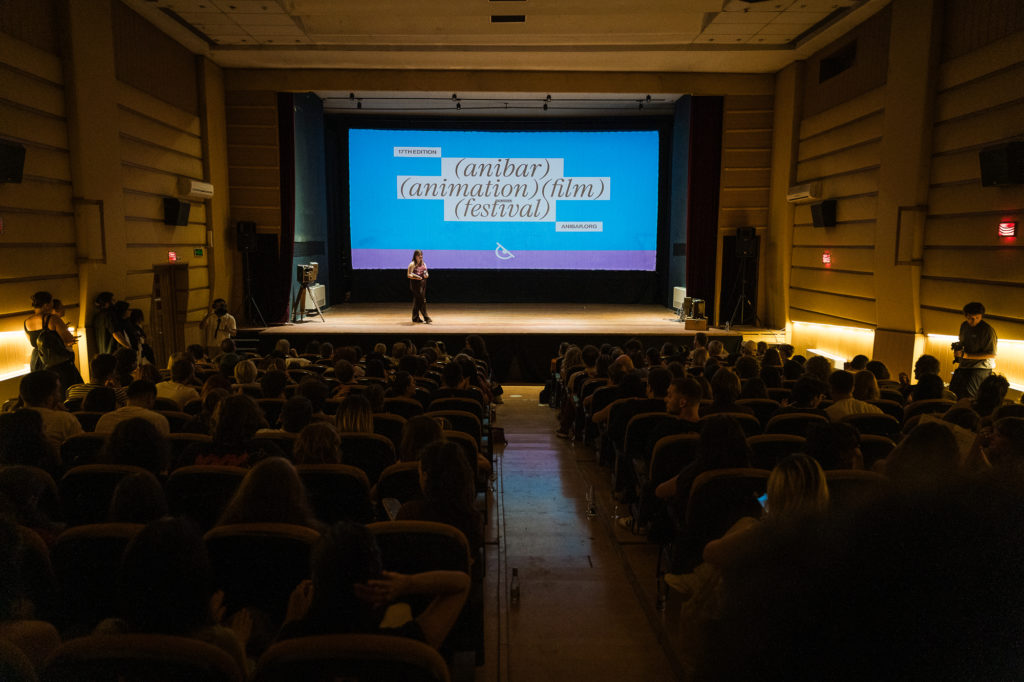
Beirut Animation Nights continues its mission of bringing Lebanese animation to international audiences. As part of this initiative, Anibar presents a traveling selection of animated short films from Lebanon and around the world, curated from current and past editions of the festival.
The program includes 23 films in various styles, techniques, and storytelling approaches, divided into two programs: the General Program for adult and mixed audiences, and the Young Audience Program designed for children and families. All proceeds and donations from the screenings will go directly toward humanitarian relief, supporting essential aid and community-based initiatives for those affected by the crisis.
The selected films offer perspectives on lives, homes, visions, and dreams transformed into ruins overnight. Kanou 4 (Ashtar Alahmad) tells the story of a 23-year-old fine arts student from Syria who fights for her life after a missile strikes her home in Damascus, only four days before her graduation. Another Winter in March (Natalia Mirzoyan) follows a couple who are forced to leave their home, but escape turns out to be a surreal nightmare.
On the other hand, faced with everyday uncertainty, many filmmakers turn toward dystopian worlds. Catocalypse (Noah Samaha) centers around a man yearning to reunite with his lost cat, so he goes to the dystopian parallel universe where cats replaced humans. In the film The Synthetic Age, the dogs attempt to escape from humans. More optimistic, Tato 4 (Ashtar Alahmad) imagines powerful AI models rooted in love and tenderness. Modeled as grandmothers, these AI figures use care, stories, and lullabies. Rather than controlling society, they aim to heal it by ending conflict, hunger, and poverty.
Reflecting on injustice, young artist Melinda Mouzannar remembers Abou Kees, “the Bag Man”, a figure from Arabic folklore used to warn children against disobedience, similar to childhood monsters found across cultures. In the film The Weight of It All, she questions whether this creature lives in all of us. What if it is long-suppressed anger shaped by the circumstances we live in? Can we dare to face our monsters?
Questions of women’s rights and gender-based violence emerge as recurring themes in films by female authors. Gardening (Sarah Beeby) addresses a still marginalized topic: the process of healing after sexual assault. In this animation, a woman retreats into the garden of her mind, searching for answers and struggling to find the “right” path forward. She realizes that healing requires reclaiming her voice and discovering new ways to rebuild herself before she and her inner garden are completely destroyed. Similarly, Through Her Eyes (Cynthia Abboud, Joyce Abdelnour) follows a 23-year-old woman who isolates herself in the middle of the ocean because of something that happened in her past. A Bloody Situation (Nerian Keywan) is a surreal animation that shows a psychological perspective of an early teen girl who is growing up in implied socio-political chaos. One day she meets Ms Moodswings, the personified menstruation blood blob.
Finally, meditative film Freeride in C (Edmunds Jansons) portrays the peaceful landscape of mountains disrupted by colorful winter sports enthusiasts racing down its slopes.
The Young Audience program brings together films that explore a wide range of topics through a language accessible to children. Using allegory, absurdity, and playful visual worlds, these films open up deeper questions about relationships, society, and the world around us. Set in everyday situations and imaginative landscapes, these stories encourage young viewers to understand and embrace differences, look beyond appearances, and face their own fears and desires.
Several films use fantasy and the potential of animation media to reflect on the nature of life on planet Earth. Stardust (Christie Khalil) visually explores the idea that we are all made of the same universe, born from the stars and constantly searching for connection. Though life leads us toward different paths and separate destinies, we remain connected through the love we share, even if only for a brief moment. Le Voleur de Casseroles (Nicolas Fattouh) takes place on the planet Ednomalie, where people are born with white cooking pots attached to their bodies. To stay alive, they must constantly rub them. Everything was fine until one night, Salokin was born without a cooking pot.
Childhood fears and imagination are explored through folklore figures, playful mischief, and acts of disobedience. Abu Kees reappears as an important figure through which artists reflect on childhood, examining how early fears, stories, and experiences shape the people we grow into. Abou Kees aw Yemeken Em Kees (Hadi Chebli) is the story of a five-year-old boy who refuses to go to sleep. Warned by his mother that Abou Kees will come and take him away in his sack if he doesn’t fall asleep immediately, Sam discovers that Abou Kees is not like his mother described him. Similarly, Abu Kees wel Batata (Antonio Salloum, Joyce Abdelnour) is set in the bustling chaos of a Beirut marketplace, where the tale of Abu Kees haunts Youssef after the boy causes mischief by dropping a pile of potatoes. His imagination runs wild when an elderly man suddenly appears before him. In Abu Kees Bala Kees (Karen Khodur), the legend is approached, imagining Abu Kees himself as a character struggling to continue his nightly task of collecting unruly children after running out of bags. Lastly, Golden French Fries (Shima Markazi Omidvar) is a story about a child who is obsessed with French fries.
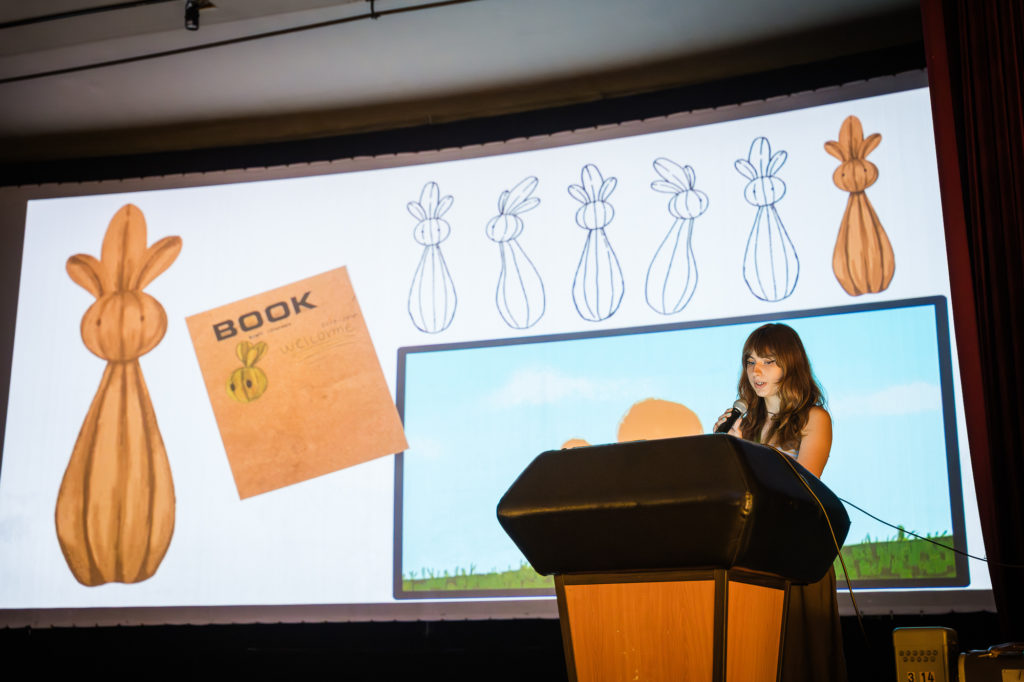
Some stories portray everyday realities and inner psychological landscapes, exploring moments of change and transformation. Kiki and Bouba – A Peachy Story (Leon Bugajski, Kinga Chłodek, Adrian Krzych, Barbara Szczerbanowska, Julia Wierenko) follows two farmers with very different ideas about growing the perfect peach. Energetic and stubborn Kiki believes smaller seeds produce better fruit, while the calm and easygoing Bouba prefers peaches with large seeds, until someone threatens his orchard. With Each Passing Day (Emanuel Nevado) follows Mrs. Piedade, an elderly mouse whose quiet life in a remote Portuguese village is shaped by routine, loneliness, and memories of the past. As her days become increasingly repetitive, she sets out to revisit a place that once brought her joy, searching for a new sense of hope and happiness.
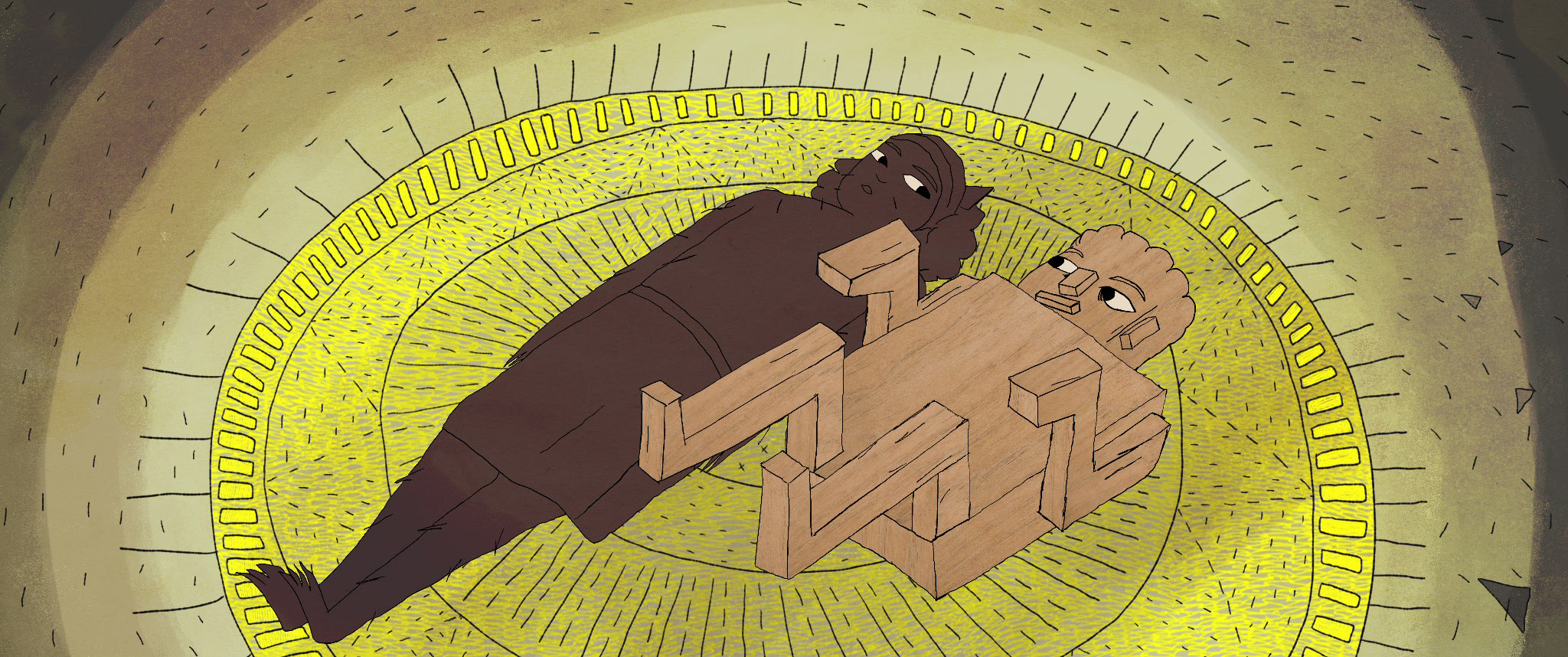
The challenges of growing up are explored through animations that encourage young audiences to embrace difference, develop empathy, and discover their own voice. In His Bubble (Hadi Chebli) follows a 7-year-old autistic boy who lives in his own bubble. His mother tries desperately to bring him out of it by every means possible, but without success. Then an incident occurs while he’s playing with a new friend, leading her to realize that perhaps, instead of pulling him out of his world, she needs to step into it herself. How My Grandmother Became A Chair (Nicolas Fattouh) is a story about a grandmother who loses her five senses one after the other until she transforms into a wooden chair. Escape Recipe (Reem Alabdulkarim) follows a girl, Noor, who struggles between pursuing her own ambitions and meeting the demands placed upon her. Noor receives a college acceptance letter that doesn’t align with her family’s expectations, and she chooses to keep it a secret. She must find the courage to shape her own future and follow the dream she truly desires.
Rules, authority, and social expectations become the starting point for films that use childhood perspectives to reflect on broader questions of power and control. Kees’s Camp (Josée Abi Rached, Lilly Xie Ekeroth, Zeina Eid) imagines a camp for disobedient kids. In the camp, they learn fear, respect, control, discipline, and submission (including the multifaceted use of plastic bags). Backjump (Adrien Nicholas, Antoine Lamothe, Benjamin Bisanti, David Gromak, Julien Robin, Cory) is a kinetic, cyberpunk journey of skate, danger, and friendship. In a police state controlled by authoritarian rule, a pair of rebellious street artists endeavor to rescue their captive friend, escape and embarrass the Sheriff dubbed “Warlock”, and make the train out of town on time.
The Main Program will take place on August 14 at 21:00 at Bazaar Cinema and on August 18 at 12:00 at Kinema Jusuf Gërvalla.
The Young Audience Program will take place on August 16 at 21:00 at Bazaar Cinema and on August 18 at 12:00 at Dukagjini Creative Centre.