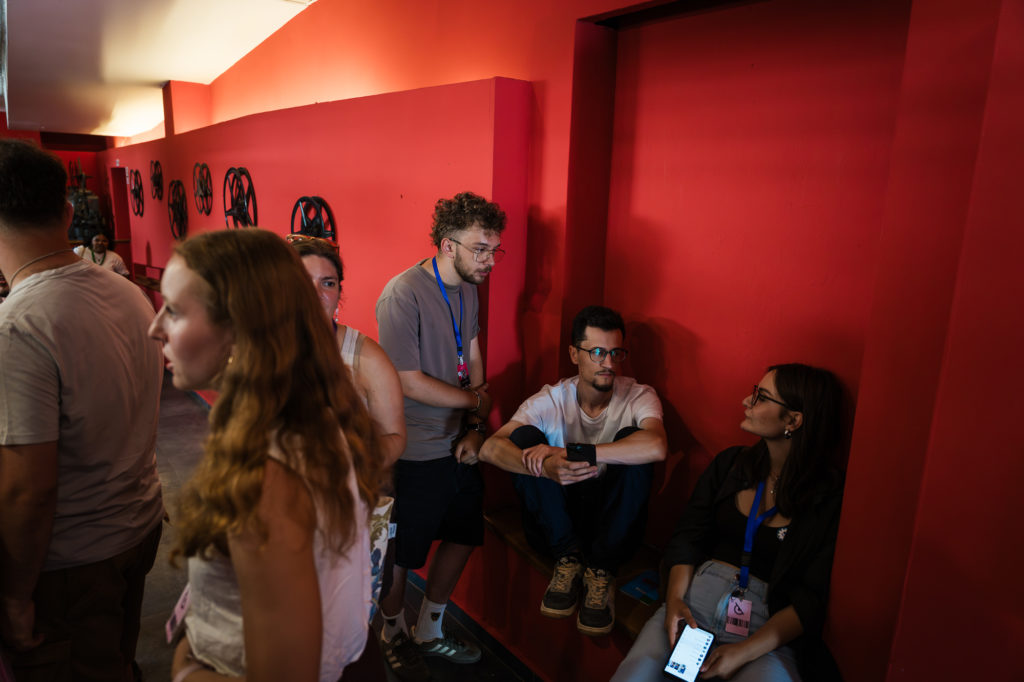
The Female Gaze in Animation: Body, Solidarity, Liberation
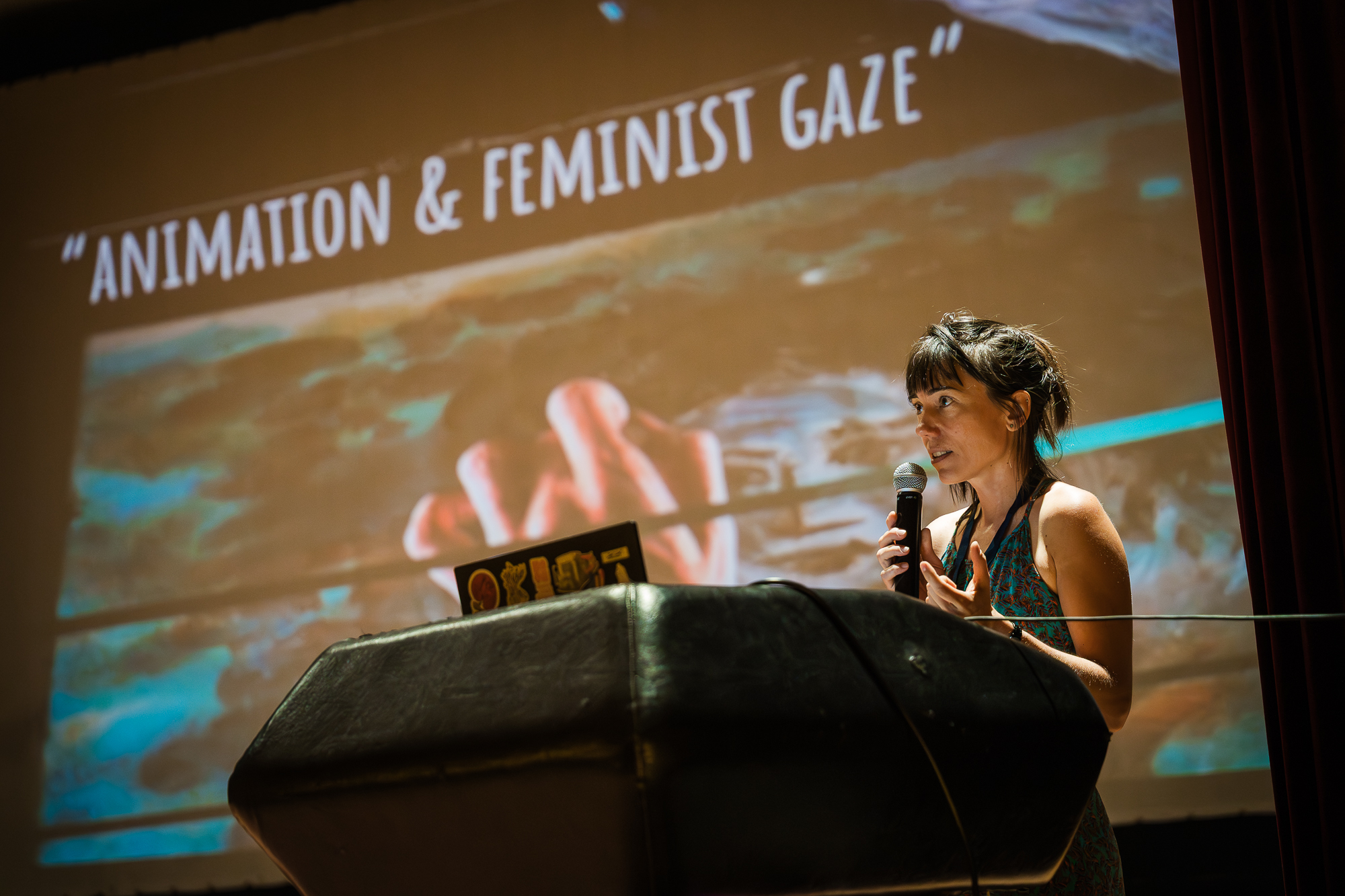
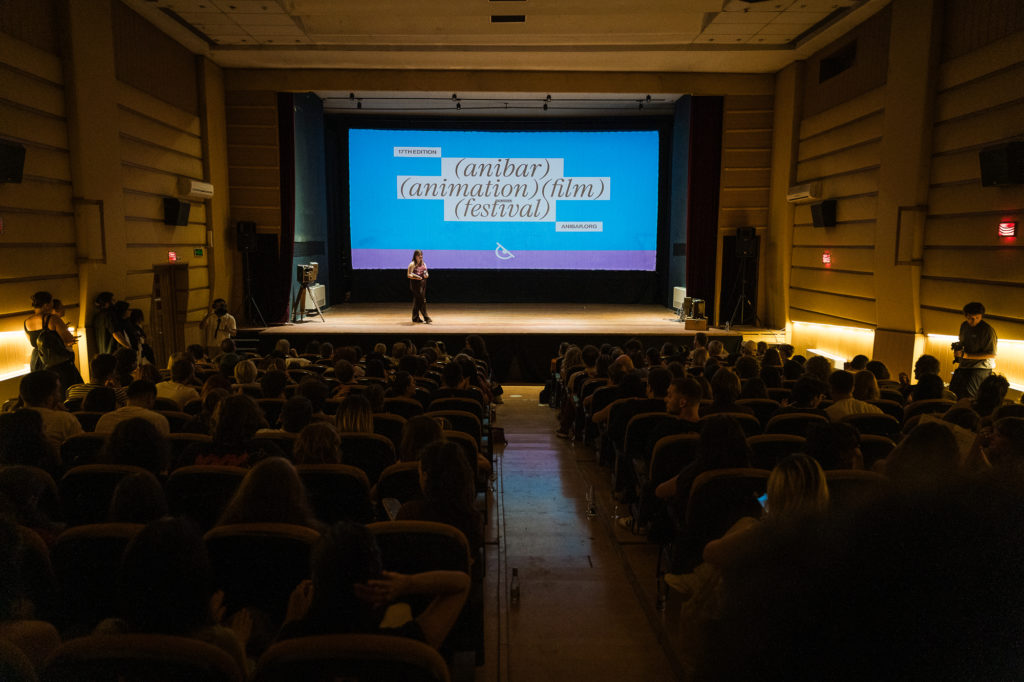
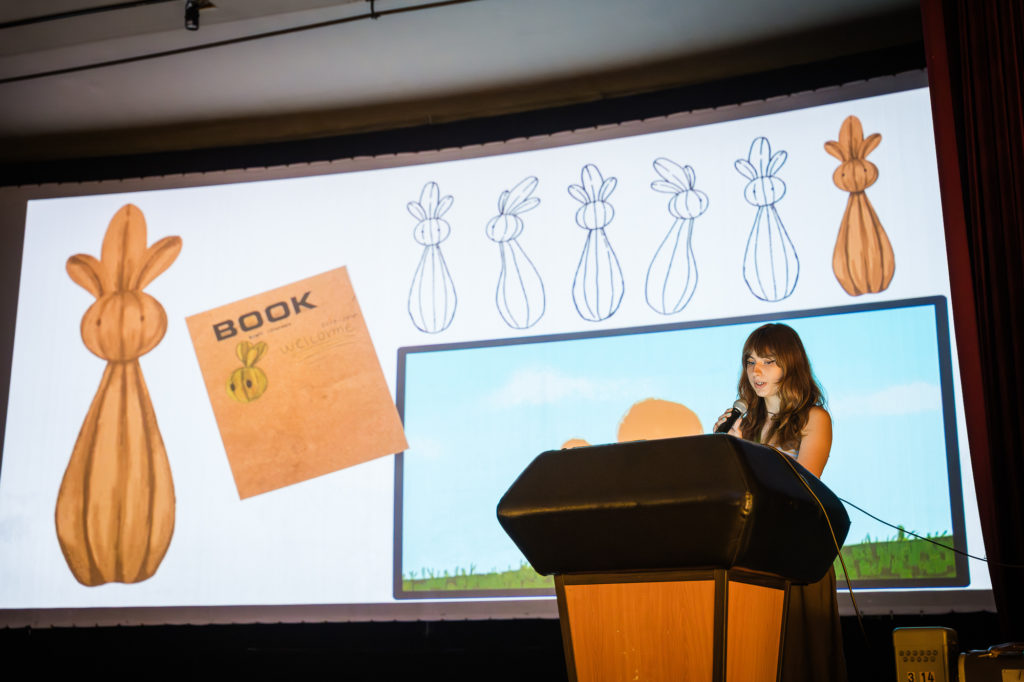
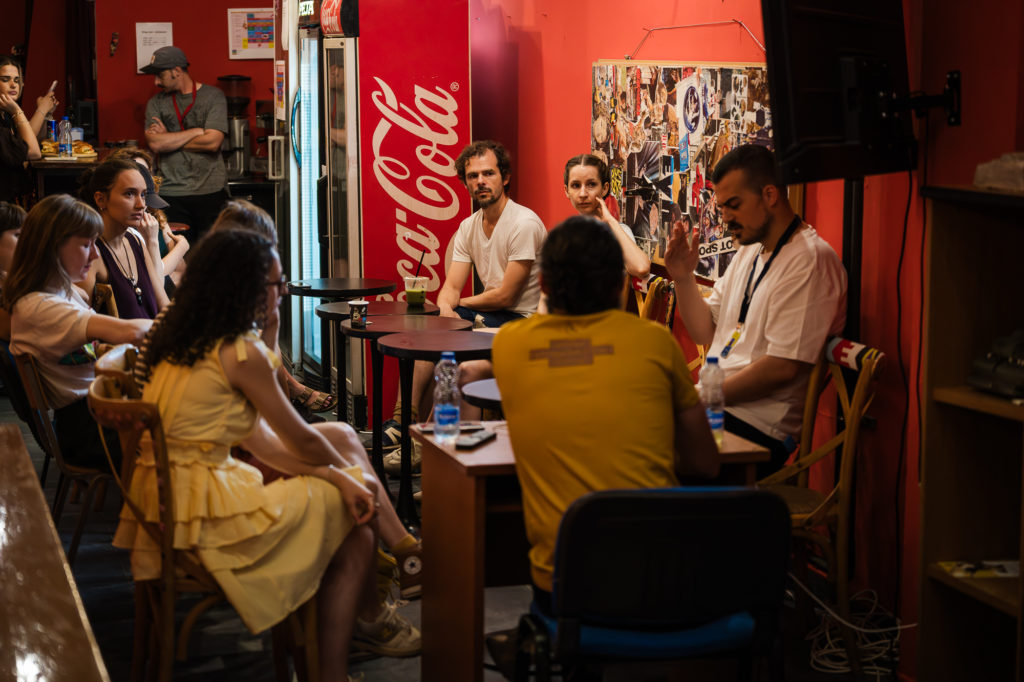
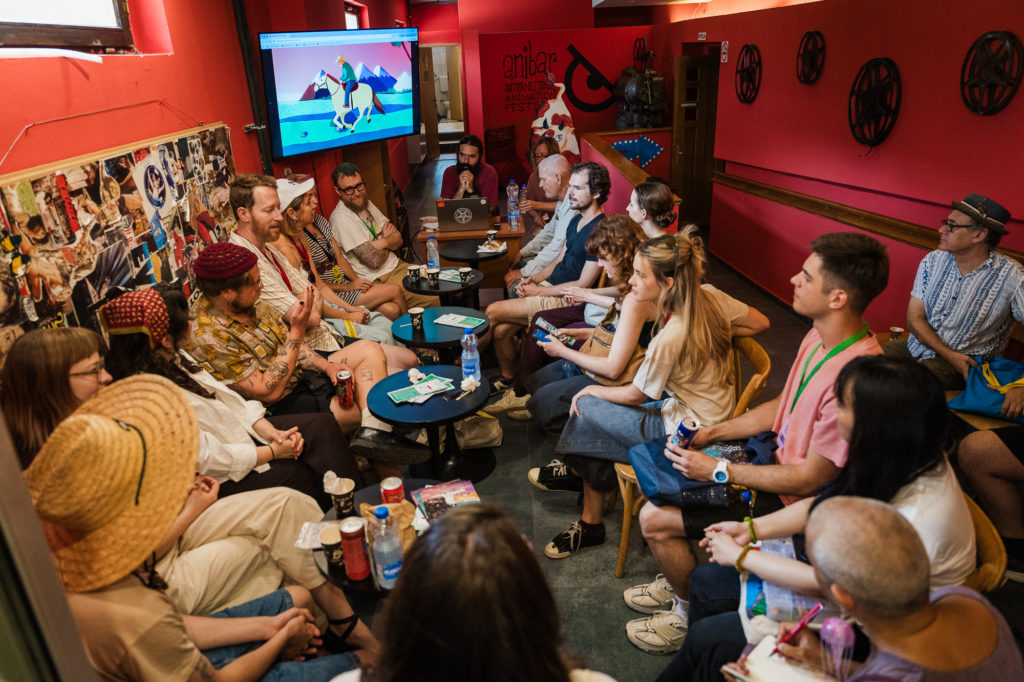
In the Cinema Jusuf Gërvalla, Cécile Noesser, an expert in animated cinema from France, gave a presentation on the female gaze in short animation.
The talk explored how animated short films have proved to be a particularly suitable field for the deployment of the female gaze, inviting a new aesthetic of desire, an intimate relationship with the female body and a community of women’s experiences.
She introduced the topic by looking back on her own path of discovering animation and sharing how one of the animated films she encountered made her realize the limitations of the male perspective in portraying women. “One of my first strong emotions came from this short film that portrayed a woman. I remember that I felt angry,” she said. This inspired her to focus her research on the different possibilities of the animation medium.
Then, she introduced the concept of the female gaze through the writings of Iris Brey, Le Regard féminin: une révolution à l’écran, and Laura Mulvey’s famous study Visual Pleasure and Narrative Cinema from 1975. She explained the male gaze, the dominant tendency in cinema, which represents women and female bodies in an objectifying and fetishized way. On the other side, the female gaze emphasizes women’s experiences and perspectives.
Noesser pointed out that the female gaze, or, as she prefers to call it, the feminist gaze, is not determined by the filmmaker’s gender but by their cinematic choices. It is a critical and sensitive perspective that questions the position of women in cinema and society. Although the term “female gaze” has become more common in recent years, especially after the #MeToo movement, this approach did not begin then. It has existed since the early days of cinema, particularly within short films, where filmmakers have explored alternative perspectives and forms of representation.
She also explained why animation, particularly short animation, provides fertile ground for the feminist gaze. She argued that short films offer greater artistic freedom and are less constrained by commercial expectations than feature films. Their production often involves small teams or even individual creators, allowing for a more intimate creative process. Moreover, animation’s unique formal qualities, including its ability to represent materiality, transformation, and metamorphosis, open up the possibility for expressing embodied experiences, emotions, and perspectives that are difficult to convey through live-action cinema. She presented the medium itself as a creative space for feminist voices.
To illustrate these ideas, she analyzed several animated short films: Asparagus by Suzan Pitt, Hammam by Florence Miailhe, Futon by Yoriko Mizushiri, Symbiosis by Nadia Andrasev, La Partita by Ursula Ferrara, and Two Sisters by Caroline Leaf.
The screenings of the films were followed by her poetic interpretations, demonstrating how animation can portray intimacy, touch, memory, and community among women. In these films, the female body invites the audience to share the characters’ experiences.
Introducing Asparagus (Suzan Pitt, 1979), Noesser described it as “the first female gaze animated film” and “a visual poem about the creative process of a female artist.” She explained how the film immerses the viewer in the subjectivity of its protagonist, creating “a very playful and sensory pleasure and mentally exciting experience.”
Describing Florence Miailhe’s Hammam (1991) as “a whole female body drama,” Noesser said that “you are dancing with the character, you are sharing an experience.”
Discussing Yoriko Mizushiri’s Futon (2012), she focused on touch and bodily sensation. Quoting the filmmaker, she noted, “The touch is the most important thing for my animated work,” explaining that the film seeks to connect with audiences through physical sensation rather than psychology, appealing to “the body’s memory rather than that of the mind.”
Through Symbiosis (Nadia Andrasev, 2019), the speaker showed how the feminist gaze can transform jealousy into female solidarity. Rather than remaining “a spectator of her own betrayal,” the protagonist gradually discovers “a community of women whose connections to the man remain in the background.”
Turning to La Partita (Ursula Ferara, 2002), the speaker highlighted how the film dissolves boundaries between spectators and performers. She described the ending as “a joyful breaking down of the boundaries between public and private, mental and physical, and male and female,” arguing that the act of watching itself becomes embodied.
Concluding with Caroline Leaf’s Two Sisters (1990), she emphasized that the feminist gaze is not only about empowerment but also about vulnerability: “The feminist gaze isn’t just about showcasing experiences of liberation, empowerment and joyful sensuality. It’s also about sharing a female experience, even if it may be disturbing.”
Through a poetic presentation and a remarkable selection of animated shorts, Noesser shared this complex and engaging topic with the festival audience, bringing theoretical concepts closer to viewers and filmmakers.