Wounds as Deep as the Sea – Palestine Animated Film Program
Stories about Palestine: Displacement. Exhaustion. Hope.
What will we see this year?
In addition to many other film programs dedicated to the overwhelming power of animation, we will also follow a program about Palestine, about its own realities that guide us through the perspectives of children, mothers, and everything that can be remembered about a land that has nurtured civilization, and now we see the atrocities unfolding . Over the past two years, since October 2023 and even earlier, with the massive and violent displacements of 1948, stories about Palestine belong to a wide realm of archiving culture, heritage, and the sensitivities of life on a land where the natives are forbidden to live. From afar, from cells, from camps, from the sea and the land: we find a life imagined not to be lived, but lived to the bone.
Stories about Palestine: Displacement. Exhaustion. Hope.
The program on films about Palestine presents a range of works that portray the familiar and personal history of a place that exists like a wandering carriage in the inherited memory, through generations.
In the current state, where we see the flagrant violations of human rights in Palestine, the path to finding reliable information is uncertain, as reporting and propaganda have drowned out the voice of truth. But films offer a form through which memory, longing, and the past are navigated, paving the way to understanding history as it happens.
This is no longer a matter of being on the right side of history, but of how we, as human beings, take a stand. These stances invite us to understand that these catastrophic realities happening before everyone’s eyes driven by forces more complex than mere human will contain an immeasurable space to learn about what an entire people are losing, and what the artists of this land could have produced if freed from such constraints.
In the Balkans, such experiences are not abstract references, but lived ones. So before heading into the cinema, think of the photographs your ancestors could never take, the human relationships that never had the chance to flourish, the handmade objects that might have been passed down as heritage in your homes, the jokes told that have now vanished in the fog of time, gone in an instant.
From personal narratives to collective perspectives, to seeing history as an amalgam of everything that is remembered: this program presents an essence of what the human experience is: remembered, lived, repeated in memory, and carried forward with the single idea that it belongs to the future.
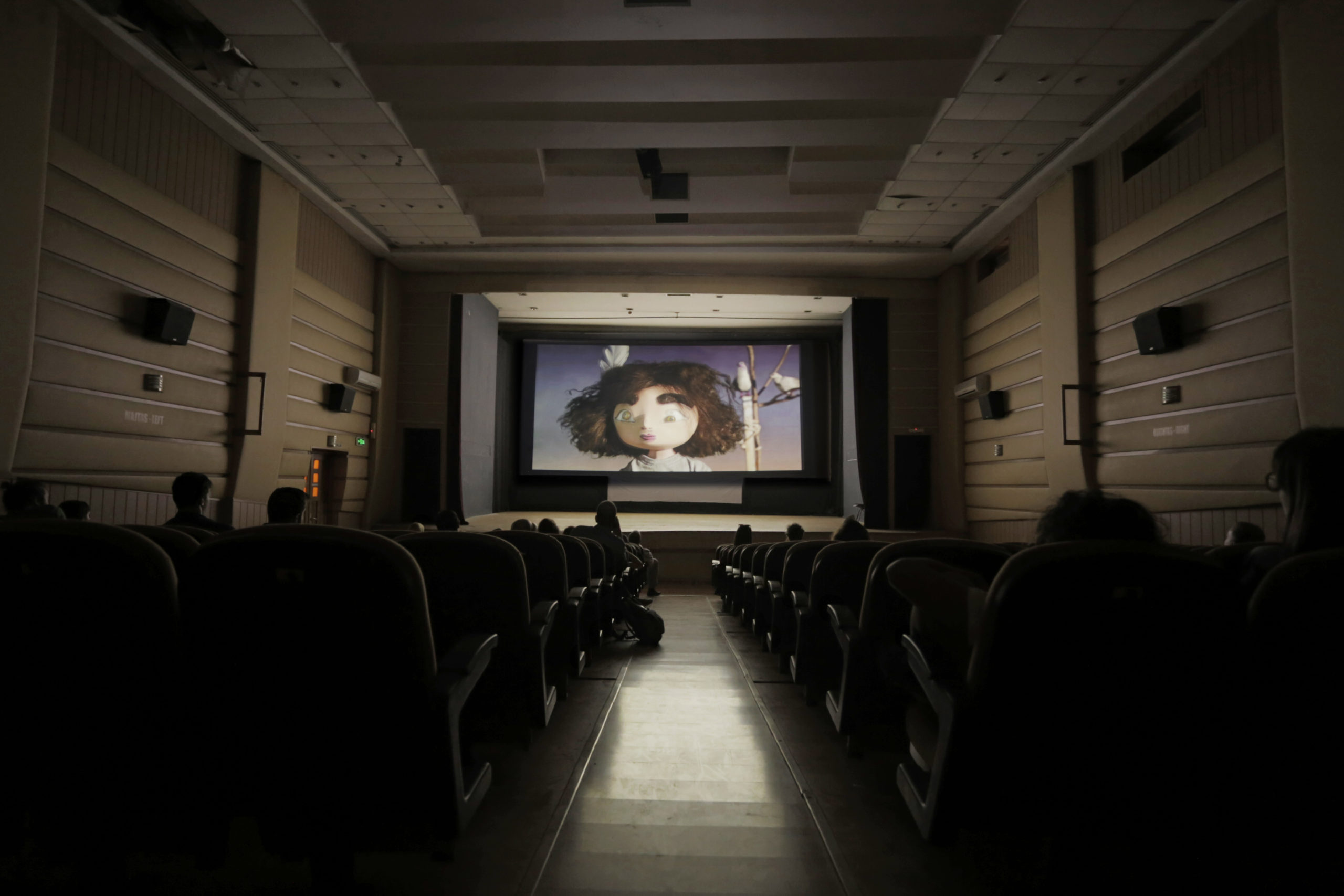
Below you can find the programme which will be screened on July 18th, starting from 9PM at Kino Carshia and on July 19th, starting from 4PM, at Jusuf Gërvalla Cinema.
“Zoo” (2022) by Tariq Rimawi takes us into a desolate environment where every sign of social life resembles a catastrophic and anxious shadow. We follow a young boy wandering the empty streets of Gaza, inspired by the story of the world’s most harrowing zoo. With sharp black-and-white lines, we linger on threatening top-down shots, juxtaposed with the sad tenderness of close-up character scenes. The playful journey ends in a tragic and absurd way, trapping a being who barely understands this world with the immense responsibility of healing a life likely to end just like the embalmed animals in the zoo. Although the narrative is simple and linear, what is not shown is what is most profoundly read. Rimawi throws a stone into the water, and we are left watching the ripples on the surface.
“Grandmother Wore Us Out” (2024), directed by Haneen Koraz, Shorouq Nahed, and Nour Abd Jawad, is created by youngsters in the Deir al-Balah camp who participated in an animated film workshop. It brings us this journey: a family settled in UNRWA classrooms turned into a living space. Each family member has the task of collecting enough water to fill the tank. Through charismatic characters and facial expression play, laughter emerges from routine events, offering moments of normalcy that become forms of resistance: how normality overlays a reality in which human beings replace survival with adaptation.
“Night” (2021) by Ahmad Saleh asks: What can we imagine for a mother searching for her child among ruins? The entire turmoil resembles a heavy omen without peace. Across various folkloric traditions from Mexico to India, we find figures like La Llorona, Demeter and Persephone, or in Albanian laments such as Ajkuna’s for Omer. The character “Night” guides the mother mysteriously led by hope and song toward what seeks to be the truth, but also toward a necessary sleep. The journey is magical, with detailed character animation resembling the luster of human skin, enhancing the sense of vitality. A lullaby becomes the mother’s path, its melodic line singing the fate she seeks.
“Uncle, Give Me a Cigarette” (2023) by Al Masna and Basel Naser immerses us in the isolated reality of prisoners—this time inspired by the life of Palestinian writer and thinker Walid Daqqa. Imprisoned for 40 years until his death, Daqqa worked and developed his intellectual activity in isolation. In his writings, he described techniques of terror and violence increasingly controlled not by people, but by operational systems hidden among cameras, electronics, and operations targeting individuals to live even in mental scarcity. Drawing from this, the film shows the only human contact through prisoners, as the enemy and the isolator remain all-powerful, but faceless.
“Memory of the Land” (2017) by Samira Badran is the most experimental film in the program in terms of how it conveys its message, layering collective and personal experiences into a half-body wandering through a cell. We see two feet moving in an isolated space, where the metallic sounds of prison bars become engines of torture. The half-body changes composition, shaped by what the mind brings forth amid facts, memories, and experiences. The body, as a medium upon which violence is exercised, stores and transforms the emotional matter into a tool of resistance. The entire skin becomes an almanac of history. Memory is saturated with experiences turned into historical moments, where the body relearns how to move and inhabit a new life directed by anonymous forces of terror.
“Limitless” (2025) by Amal Al Nakhala offers a capillary approach to life in Gaza, combining drawings and fragmented, interrupted sketches of a life hoped for, dreamed of, but not brought into fruition. The image’s poetry in this film touches the exhaustion of what could have been possible but never tangible.
“Mariam” (2020) by Dana Burr finds heritage and weaving as a way to soothe the self and establish belonging, turning the character into a tree, an olive, a cotton cloth, into a red thread, a woman wrapped in her hair amid a dreamy greenery. Yet behind her, one sees the longing and need to live this feeling as a present that doesn’t know how to fade.
This reading of the program concludes with “The Tower” (2019) by Mats Grorud the only feature-length film in this category. Through the narrative led by Wardi, we find the history of Palestine across three generations following the events of 1948. The story of Palestine’s occupation, turned into an open-air prison, unfolds after the Nakba, where two-thirds of the population were displaced to neighboring countries like Libya or Egypt, and later to Western countries such as the U.S. or Canada. Beyond the human and societal collapse, we are shown a family settled in a camp near Lebanon, where watchtowers appear to grow with each generation, and terror descends from above via helicopters, radars, cameras, antennas ever more present and more often invisible.
Wardi wanders the camp, asking family members about the past and what they’re doing to change their future. Amidst paralysis and immobility but with deep hope for a dreamt future in what they call home we meet: her grandfather, frozen in silence; a cousin who finds courage in standing fearlessly under the open sky even during bombardments; and her uncle, who nurtures life until his last breath. Family life continues: sibling quarrels and motherly advice keep Wardi’s life anchored in normalcy, but her desire to change everything and escape the grip of occupation grows, daring with more wisdom.
Despite her childlike sensitivity and quick grasp of her people’s resilience, Wardi also learns the story marked by the rebellion of a young girl demanding immediate solutions. All dialogues dissolve into buildings that have become mental structures of a home but are never quite the home they long for.
Yet through this story, we also find resistance in the desire for isolation and retreat: raising birds, listening obsessively to “In the Morning” by Bee Gees, preserving stones and objects with longing. All this to show the little girl that resistance also comes in quieter, wiser, and stronger forms.
There is much to be learned and digested from the idea of how peace should arrive, of what resistance looks like. History and tradition do not remain merely a memory or metaphor, but scars that are felt and lived: while everything happening on this earth resembles what history books have always told us must never happen again.
– Author: Blerina Kanxha