Discovering new horizons: Anibar’s animated selection for the young audiences
What kind of world are we leaving to the next generation?
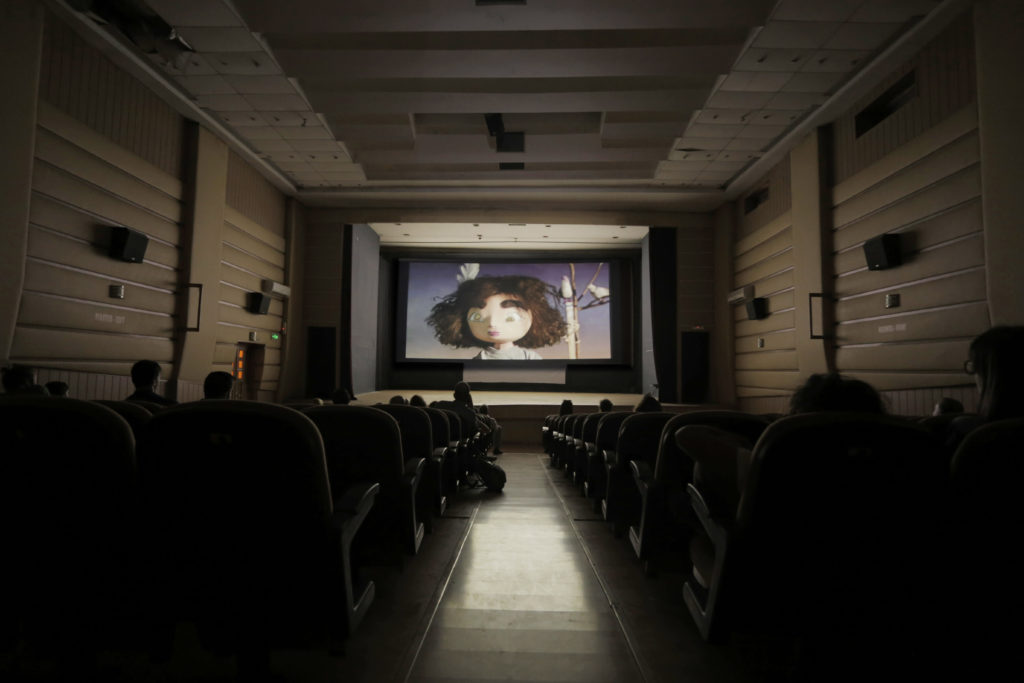
The 16th edition of Anibar unfolds in turbulent times, when we find ourselves asking: What kind of world are we leaving to the next generation? And what can we even say to our children about the moment we’re living in? Without answers, we continue to believe in the transformative power of art, its ability to educate, to raise awareness, and to nurture empathy and compassion. Children are the most important link in this chain. The more they leap over fences and discover new horizons through culture and art, the more we can believe in a better future. As every year, we present a powerful selection of animated films for young audiences: over thirty short films from around the world, created by authors brave enough to explore complex topics, while keeping the tone and spirit accessible to kids. This year’s selection is shaped by themes of empathy and solidarity, the beauty of diversity among people, and our relationship with nature. The article highlights just a few of these films to inspire you to check out the full program and explore many fascinating titles. Bring your kid to Anibar and sail together into the playful, colorful, emotional world of animated films!
Following the tradition of children’s stories, many of these authors use anthropomorphized animals to explore complex emotions and situations through a language understandable to kids. Down in the Dumps (Vera van Wolferen, Netherlands) takes us into the world of bugs to address the issue of bullying through exclusion. Cinelli, a perfectionist ladybug, doesn’t invite the cockroach Peri to her birthday party. In revenge, Peri steals her shell. When Cinelli realizes her shell is gone and that she must live without her dazzling exterior, she sinks into a deep tunnel of depression. Meanwhile, Peri begins to see that not everything in the ladybug’s life is as perfect as it seems. Through a role reversal, a method common in fairy tales, the film gently unfolds a story of embracing the differences around us and the truths within ourselves. The power of unity is also explored in Zoobox (Myriam Schott, Linda Yi; France), a film based on the mythic Old Testament story of Noah’s Ark. As the waters rise, all the species of animals board a great boat. The story follows little kangaroo Kerala, was lost his parents. In searching for them, he meets various animals who each use their unique talents to help. And more than that, when they unite in their authenticity, they manage to grow seeds on the boat and produce enough food to survive until they reach the coast.
On the other side, a flora and fauna perspective is used to show the destructive impact of humanity on nature. One of the most striking films addressing this theme is Ivanščica (Tea Bošnjak, Croatia), which visually recalls the classic “Bambi”. It portrays the beauty of a Croatian mountain through the eyes of the animals that inhabit it. The natural idyll is gradually disrupted by unsettling mechanical sounds and the arrival of quarry construction, until the harmony of the ecosystem is ultimately broken. The film ends with an animation of the mountain collapsing, followed by a photograph of the real location on which the story is based. This simple yet powerful storytelling offers a quiet reflection on ecological reality. Once upon a time there was a mountain (Boris Mashkovtsev, Russian Federation) takes a similarly direct approach, portraying the mountain with anthropomorphic qualities. It suggests that nature is not merely a resource to be preserved for human benefit, but a living entity in its own right. The mountain lives in quiet harmony until humans arrive, and their appearance marks the beginning of a growing invasion.
Many of the films in this selection use the powerful medium of animation to explore themes of embracing difference and fostering equality, approaching these topics through a variety of perspectives and storytelling styles. The film Skin Color (Gilad Pfeffer, Liya Daniel Elbashan; Israel) follows brave little Maya, who, during an art class, wants to draw her self-portrait. When she realizes that the so-called “skin color” crayon doesn’t match her own, she is caught between the truth she carries and her desire to be accepted. Eventually, Maya dares to name what she sees and encourages the whole class to embrace the spectrum of shades that shape the world. With minimalist lines and playful bursts of color, the film blurs the boundary between inner and outer reality. Through visual art references, it also gently questions dominant beauty standards. Most importantly, this tender and suggestive story encourages assertiveness in young girls.
Another film that deals with race, Maya’s Song (Jayakrishnan Subramanian, Franziska Schönenberger; Germany), is built around direct personal confessions that include elements which may not be beautiful, but are important to acknowledge, so we can recognize them when they reappear around us. Maya, an African American girl adopted by a German family, shares the struggles she has faced and her journey of transforming those experiences into artistic expression. Mixing documentary footage with animation, the film uses black-and-white visuals to vividly convey the emotions of sadness and fear she went through, culminating in a final, liberating song. A similarly sensitive confession is present in the film Grandpa has a broken eye and mom is an adventure (Marita Mayer, Norway), where children of different ages meet in a park and share the thoughts that make them sad. Each of them has a family member with aphasia, a condition that makes verbal expression difficult. In their quiet confession, speaking becomes an act of healing. By giving space to this often overlooked experience, the film gently brings a neglected topic into the public sphere. One of the most compelling films in this year’s selection, Lola and the Sound Piano (Augusto Zanovello, France), also explores the importance of recognizing the contributions of diverse individuals to society. The story follows a bright girl named Lola and her five-year-old autistic brother, Simon. While taking care of him, she notices his sensitivity to subtle, hidden sounds. With the help of a friend, she builds a noise machine to communicate with him. The film’s experimental music is intricately woven into its striking visual style, an animation that layers various digital techniques to create depth and a remarkable fluidity of movement. Capturing the spark of inspiration that drives this extraordinary girl, the film celebrates the authenticity from which the most remarkable creations are born.
Explore the full program HERE. Screenings run daily from July 14 to 20, between 12 and 1 PM at the Dukagjini Creative Center.
Author: Ivona Djuric