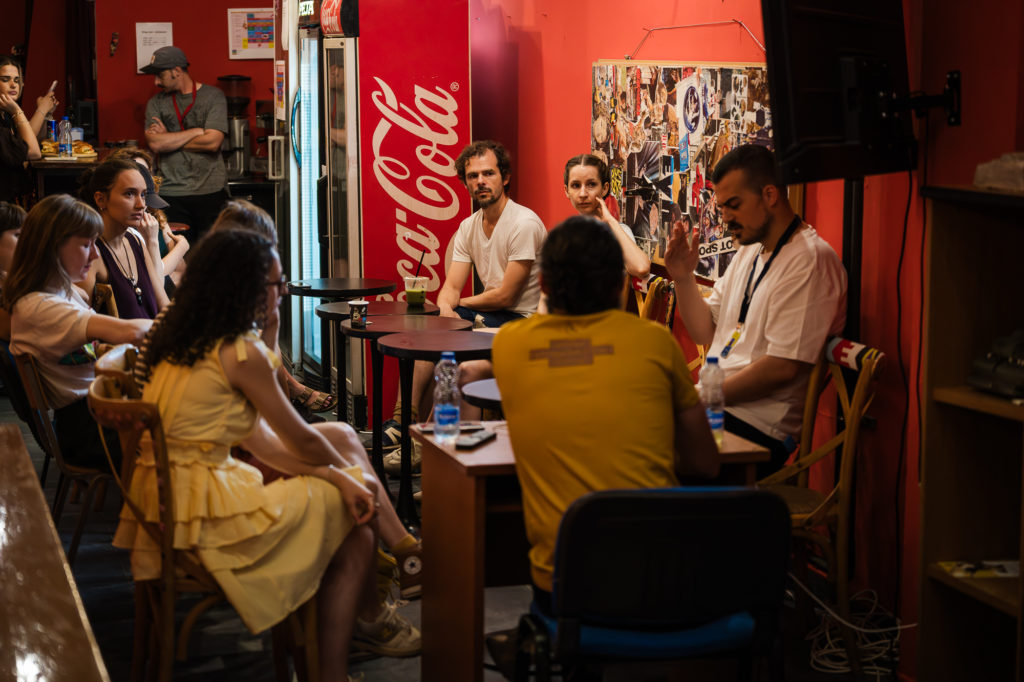
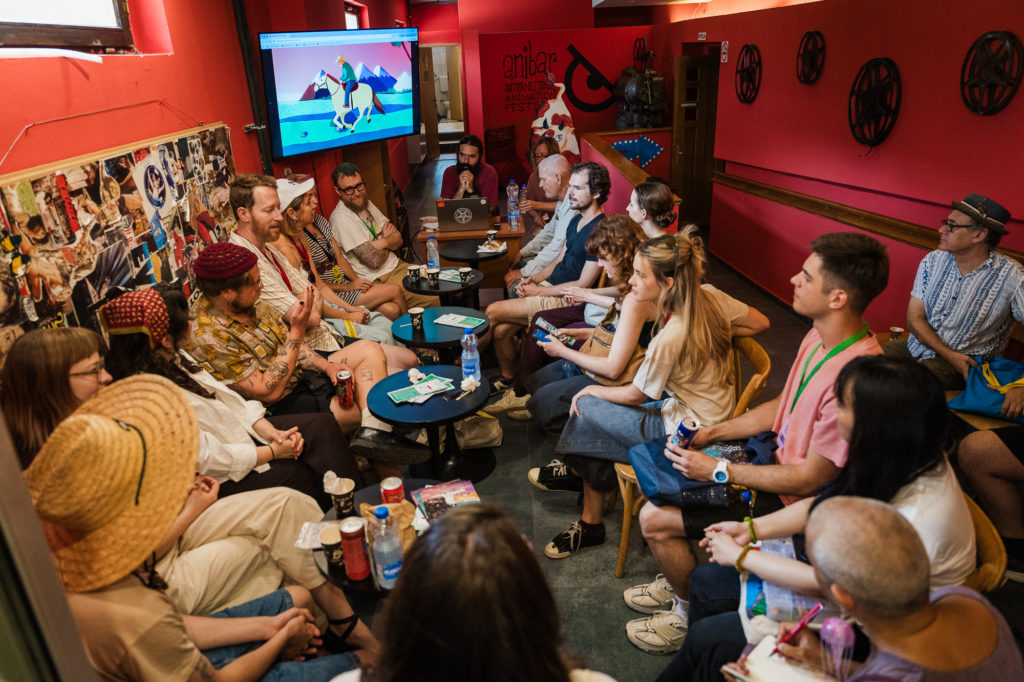
Lum Radoniqi: Student Competition II
Lum Radoniqi
“Guilt”
The film opens with beautiful scenery, with peaceful soothing music. It seems that nature is in harmony and that life is worth living. Love triumphs over the corners of other social constructs. Until something happens and we begin to feel the darkness as it conquers us, and we try to fight it with light to the last breath. The movie “Guilt” deals with a character that has trouble overcoming a trauma caused by the loss of a loved one. Whatever opportunity or means he undertakes, darkness continues to haunt him. That darkness intensifies and pulls energy from the source of guilt that this character feels, blaming himself. The truth is that the human being lives in the present and the past can be an anchor that holds us back, until we surrender to it and dive with it into the depths of darkness. Trauma needs to be treated. Life has to go on, but of course, this is easier said than done.
“Blieschow”
This movie deals with the rivalry between two mindsets, that of consumerism, the idea that nature is our product and the other idea, that we are part of nature and that we should treat it with compassion and care. Tomi, the main character faces dilemmas and difficult decisions during the unusual summer he is spending in the village. In contact with nature, his instincts are questioned; where as a young boy he begins to develop different beliefs and views. In the movie, we have an interesting parallel when a large creature surrounds Tomi and later Tomi hurts a small bird. Tomi faces a challenge when he has to cut a chicken for individual consumption, which he cannot do, even though he will feed himself with it. Things settle in such a perspective, where we as humans are just a link, part of a much larger chain.
“Pool”
What may actually seem challenging and complicated can weigh us down and overwhelm us, even without making the first attempt. We often tend to be biased towards situations which only after we find ourselves in them do we realize that our assumptions were wrong. Many challenges seem insurmountable to us as we overcome them ourselves and encourage others to do the same. Many people seem “strong” and heartless until we meet and talk to them directly. We must try not to get caught up in preconceptions, even though we cannot completely ignore them.
“There’s a Cat under the Car”
Nature and human beings must coexist. In this short film by Islena Neira, we see a cat (Nature) and a car (Science) floating in the air and falling down. Their cohabitation is interrupted by man, who at all costs wants to act on his own, to take possession over the cat, but who has no idea that he is destroying it. In this regard, the car takes revenge and rescues the cat, removing it from the human’s claws. Our human instinct, to possess and consequently to destroy nature, comes at a price. In this regard, we must learn that we receive as much as we give. Nature treats us the same way we treat it.
“The Breakaway”
Many things can happen overnight. Through Lisa’s eyes, we see a reflection of life, the love to inspire life in others. As children, we are not as aware of death, and as a result, we experience every moment with unprecedented enthusiasm. Lisa is precisely a child who lives life in the moment, until there comes a time when her mother has bitter news that we never hear, that Lisa however experiences and as such and it changes her mood. Everyday life can change from one extreme to another without realizing it at all. And as we grow older, we try to live with the fact that anything can happen and life goes on in the margins of monotony.
“Thorns and Fishbones”
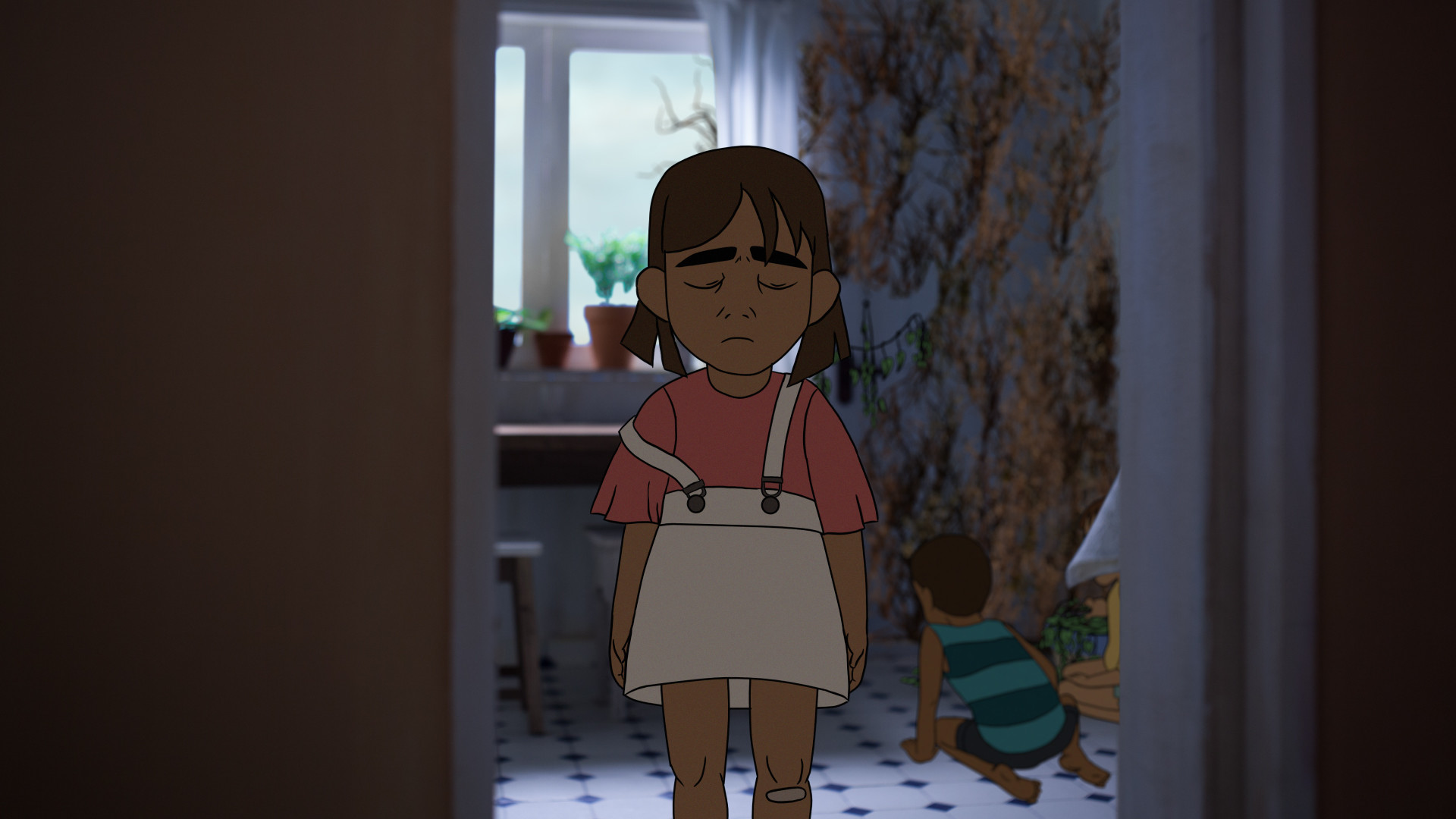
Three children are lost in play, deeply immersed in their own imagination, while their mother is almost absent in their lives. Their home is a refuge and a prison, the children are joy and sorrow, until they finally see a way out of the prison and consequently from the misery that has gripped them. The story is similar to Plato’s Allegory of the Cave. It describes people living in a cave, where they see a reflection on the wall, directed by someone from behind, until the moment when they break the handcuffs and come out of the cave, where they see the source of light (the sun) and are illuminated. This family is in search of the truth, and to find it they have to face misery.
“Un Diable Dans La Poche”
A children’s game quickly takes another direction when the children witness a murder. In fact, the children experience the game as if it was real and this makes them continue the game for a while. The journey of a child from a human to a traitor, only because he wanted to be fair. A story with chapters, which reveals the killing instincts that these children acquire by playing, which make them change as human beings, strip them from their childhood and become adults, even though they are in fact just playing.
“Where Am I”
This film presents the dualism of a man, a mind divided into two parts that seek peace with the rest of the self. A kind of odyssey where man seeks himself. The questions he poses to find his own truth. Finding peace with yourself is not easy, especially when you have two opposing sides fighting for possession of the body and the mind. To coexist with your thoughts means to agree with yourself, until you finally become one.
Lum Radoniqi biography:
Lum is a director and screenwriter from Peja. He finished his higher education at the Faculty of Arts, at the University of Prishtina. He has made 6 short films, some of which have been screened at various film festivals. His latest film “Evidence” has been screened at Dokufest. He also deals with various writings and analyses in the field of film, which have been published in various cultural sites.