The “Unpaid and Unseen” Panel at Anibar Reveals the Reality of Women in Society
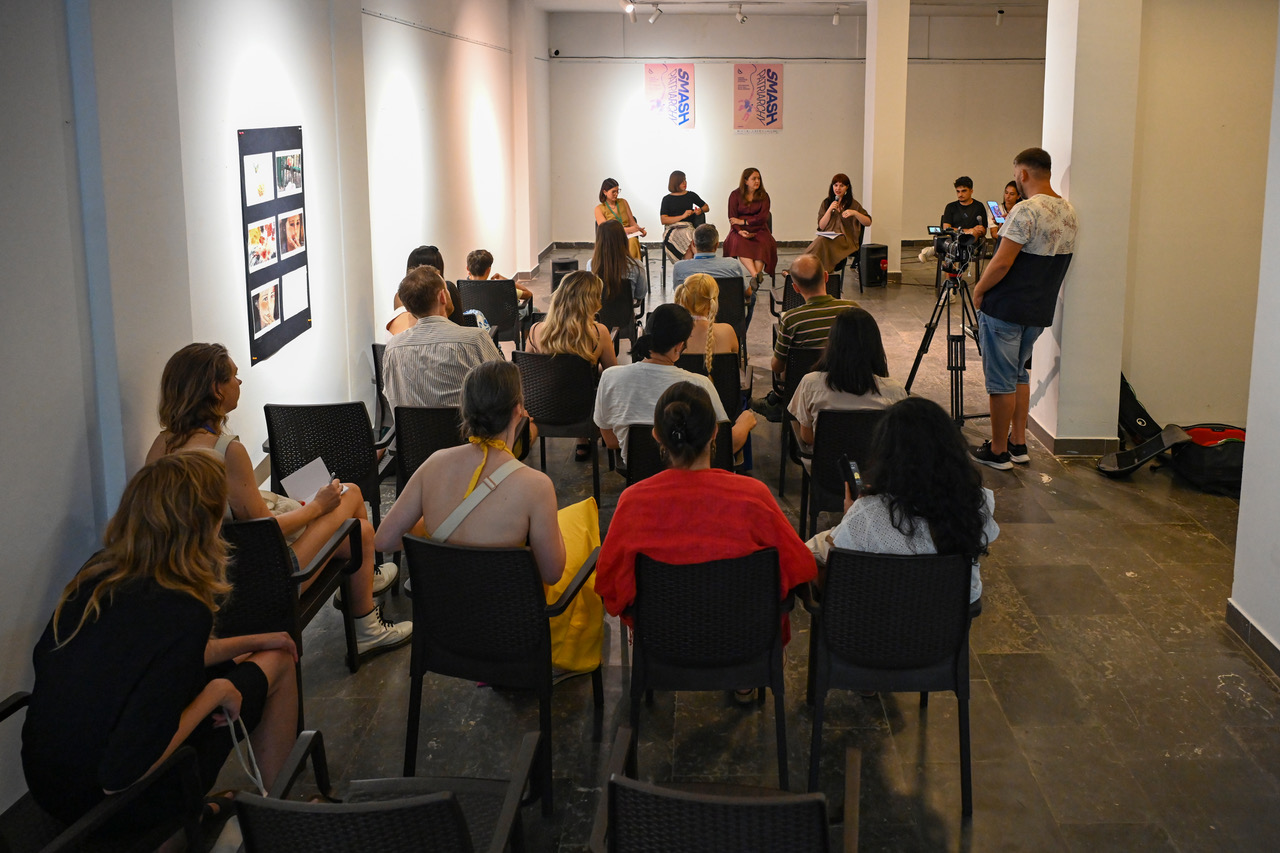
The panel “Unpaid or unseen” explored how traditional gender norms affect the lives of women and girls both individually and professionally; firstly through video screenings and then a discussion.
During the festival, besides films and master classes, we invite visitors to join us for a series of panels featuring remarkable speakers. Starting July 17, all panels will be taking place at 5:00 PM at the Art Gallery in Peja. This year’s lineup includes four engaging panels where everyone is welcome to share their thoughts and discuss a variety of important topics.
The panel “Unpaid or unseen” explored how traditional gender norms affect the lives of women and girls both individually and professionally; firstly through video screenings and then a discussion. Moderated by Mirishahe Syla, the panelists Dita Dobranja, Hana Bacaj and Luljeta Demolli discussed the social, economic, and psychological impacts of these gender norms and highlighted methods for promoting a more equal division of unpaid work.
As a result of gender norms and traditional social constructs formed from early childhood, expectations often arise that women and girls should take on family care responsibilities as unpaid work. These norms are perpetuated by societal beliefs that caregiving and domestic duties are inherently female roles. From a young age, girls are socialized to prioritize these responsibilities, leading to an unequal distribution of unpaid work within households.
This unequal distribution intensifies in adulthood, as women often find themselves juggling multiple roles as caregivers, homemakers, and professionals. The demands of unpaid work can limit women’s time and energy, hindering their opportunities for individual growth and career advancement. Women may face challenges in pursuing higher education, gaining professional experience, and advancing in their careers due to the significant time commitment required by unpaid domestic work. Therefore, the impact of traditional gender norms extends beyond the personal sphere, affecting women’s economic and professional development.
Luljeta Demolli highlighted that women’s employment in Kosovo is only 14% and she emphasizea the lack of policies addressing unpaid work. She noted that fields dominated by women often involve extensive invisible labor, typically an extension of their domestic responsibilities. She advises young women to pursue their careers and avoid becoming entrenched in invisible work.
Dita Dobranja discussed how the current economy relies heavily on women’s contributions, particularly in unpaid labor, which remains unmeasured and undervalued in GDP metrics. She argued that the system is designed to sustain itself, asserting that the fall of patriarchy is intertwined with the fall of capitalism.
Hana Bacaj pointed out the dichotomy between private and public life, calling for better policies to reduce the burden of unpaid labor on women.
The panel offered very valuable insights and was followed up by an additional cocktail event where guests were given the opportunity to further delve into this topic and present any questions or comments they might have.
We invite you to join us at the other panels that will be taking place on the upcoming days!
For more information:
Email: [email protected]
Phone: +383 44 131 516