Shorty and Trashy: We have no words. Oh wait, there is plenty to say.
The trash aesthetic has settled in various eras...
The trash aesthetic has settled in various eras, originally emerging from reproductions of original works found in different frescoes or paintings from the Renaissance period thus preceding kitsch. After kitsch came camp, and then trash, but this isn’t a lecture on aesthetics that fall outside traditional beauty or symmetry. In fact, this program, curated by Miyu Distribution, a company founded in 2017 focused on distributing short films and works from animation schools or independent production structures, offers something else entirely.
In their practice, they aim to create a system where film aesthetics and sharp themes merge into a dimension that chases the irrational and awakens the need to understand the strange and the different in cinema.
But think of this session like this:
A biotech entrepreneur promises semi-organic chicken thighs, horribly unhealthy, but incredibly tasty. A girl whose favorite hobby is taxidermy. She loves her cats dearly. And she wants to love them forever. No matter how they are: alive or… not alive. A psychedelic trip overtakes a boy during what might be the most boring night in the world, when you’re alone. Completely alone. Imagination unravels like a matryoshka doll each layer revealing a brand-new issue. Two career boxers clash, their elegant punches accompanied by classical music. Notes and blood become their own language of pain.
If you think you’ll leave the cinema without a sense of wonder, then perhaps you’re already living in a film that should be part of this program.
Now let’s get to know each film more closely:
Animals (2019), directed by Tue Sanggaard, begins with a deceptively simple idea that would trouble philosophers: what is the true nature of humans in isolation? A group of people find themselves trapped in a subway car. The urge to panic is infectious, spreading like honey. Chaos erupts, order is overturned, ethics and basic norms of human interaction dissolve. The instinct for survival drives people to the core of fear, and the natural response to fear is to unravel the world as we know it maybe even go a step further. Yet, the passive urge to film the extraordinary madness unfolding doesn’t make one any less insane.
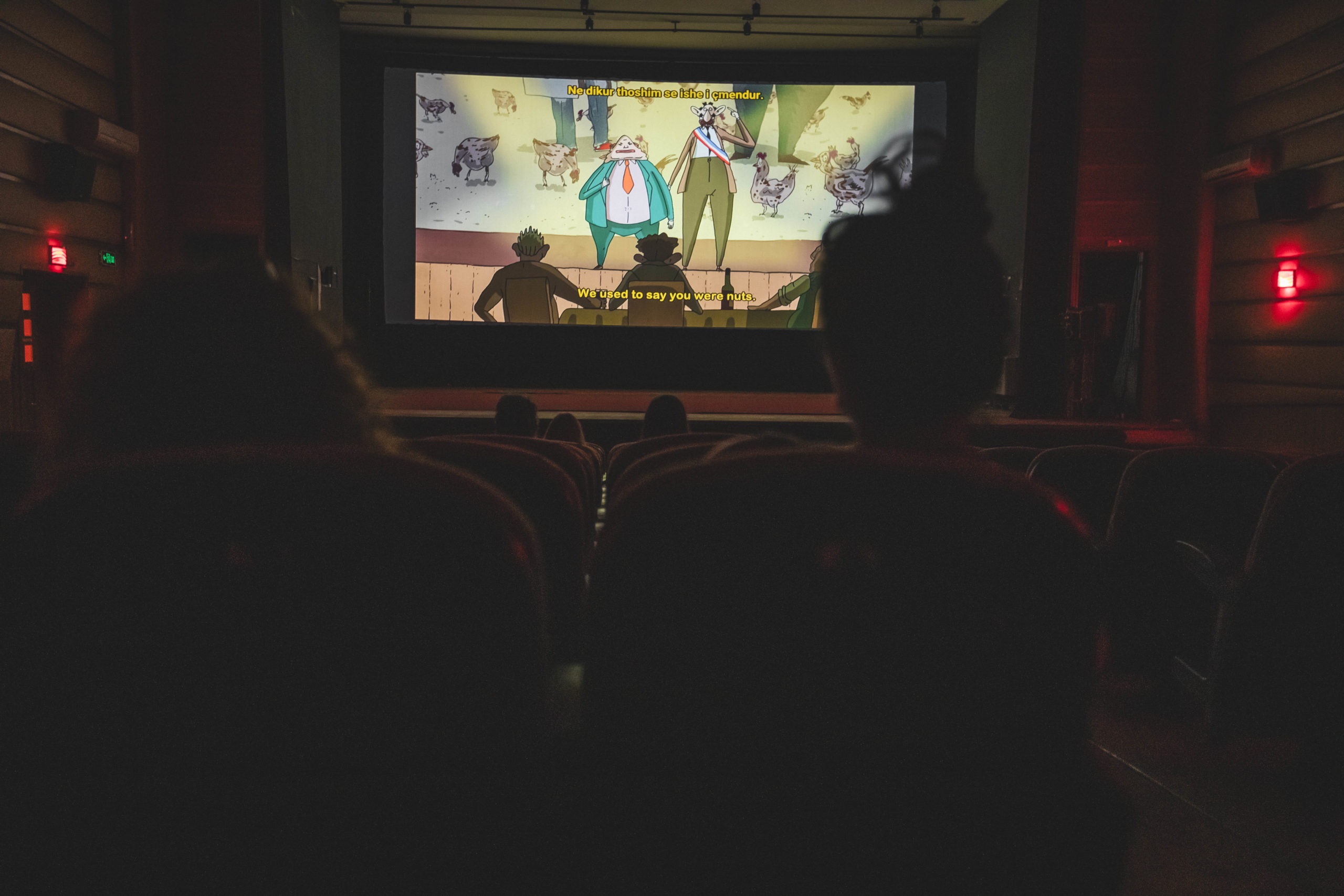
Chicken of the Dead (2019), directed by Julien David, we all know the pathetic enthusiasm of commercials, where the product becomes the sun around which human experience orbits. Glossy falseness saturates the language, slogans, and overly descriptive buzzwords, erasing all room for critical thinking. In this world, a stereotypical entrepreneur obsessed with profit is portrayed with brutal honesty yet offers not a product to buy, but an experience to live. As always in such films, madness erupts those who consume the chicken thighs become hybrid creatures’ half-chicken, half-human, deranged, and spasming under the product’s spell. Is there any escape from relentless advertising? We still don’t know.
Dadman’s Reach (2018), directed by Quentin Vien: We’ve all suffered the endless torture of rejection and lost love. We’ve all extended our dreams beyond life itself, letting illusions cloud our minds with their sweet poison, intoxicating, disorienting, and denying reality. Heartache tightens thought with surgical precision. The character in this film drifts through this fog, finding himself in a space that neither belongs to him nor helps him forget; instead, it hardens his state and his life.
Catherine (2017), directed by Britt Raes: A girl and her blue cat live distanced in a world where no one understands them—but they live in bliss. Until that love becomes an obsession. With her sweet demeanor, she pets all her cats, which tragically, she always ends up killing. She taxidermies them. Preserves them. Keeps them with her, always. Like a Roald Dahl tale, what one desires most becomes the curse that marks them. A sharp story about the obsessive and timid nature of humans.
Best Friend (2018), directed by Nicholas Olivieri, Yi Shen, Juliana De Lucca, Varun Nair, David Feliu: Humanity’s bond with non-human entities, robotic or holographic, has roots in the 19th-century beginnings of science fiction. This time, the “Frankenstein” is a beautiful figure activated through a screen, taken everywhere. The hologram talks back, offering companionship. In the blur of confusion, removing this device as an antidote to loneliness, one of postmodern life’s deepest wounds, leads only to pure and total madness.
The Night I Danced with Dead (2017), directed by Vincent Gibaud: The need to take our grieving minds and consciousness beyond physical experiences can lead us down paths rarely walked. Gibaud’s character finds himself dazed but freed from pain. What we see is a visual poem one that doesn’t speak the language of perfection, but of realizing that even our most mundane dreams may not lead us to comfort or peace.
The Open Jaw (2017), directed by Auguste Guicho: One of the best aspects of the trash aesthetic is that it finds humor in the strangest places. The character here is so hungry that he descends into delirium, showing that our ideas of human limits might be completely wrong. We are all just barely breathing beneath the weight of absurdities that define our existence.
Preston (2016), directed by Gabriel Amar, Louis Doucerain, Joseph Heu, William Marcere, Terence Tieu, and Morgane Vaast: A treat for fans of boxing, this film explores how adrenaline captures our attention and helps us feel free. But this isn’t your usual boxing match it’s an aesthetic reimagination of boxing as opera. The cultural clash between opera (a refined art) and boxing (a mass sport) leaves the audience curious, questioning, but undeniably entertained.
A dizzying spin through what is considered humorous, revolutionary, and intensely engaging. Shorty and Trashy embodies the way we now consume media, at the speed and ease of a single second’s passing.
Author: Blerina Kanxha
Photo Credit: Anibar / Elmedina Arapi