Mayhem in all Balkans
"That’s just how we’re made."
The program of films in the Balkan Competition category at the 16th edition of the Anibar International Animation Festival invites the audience to take part not only in a fierce competition of stories that unfold within urban life, as both cause and consequence of a fast-paced and uncontrollable existence, full of problems, sorrows, and the rebellion that defines the troubled spirit of the Balkan individual.
We are used to perceiving the Balkans as a problematic territory, staggering through an atmosphere marked by historical wounds, teetering on the edge of political and social transitions. The default explanation seems to be: “That’s just how we’re made.” But in fact, not everyone is like that. The mindset of the Balkan individual now demands that we consider all the nuances of understanding someone who internally contains underdeveloped stages of different time periods, struggling to reshape themselves for the future.
The Balkan Competition category at Anibar arouses curiosity about how various modern issues are interpreted and absorbed through the worldviews of artists and creators. This program offers perspectives full of grit and soul, always unflinchingly honest with the realities these artists live through.
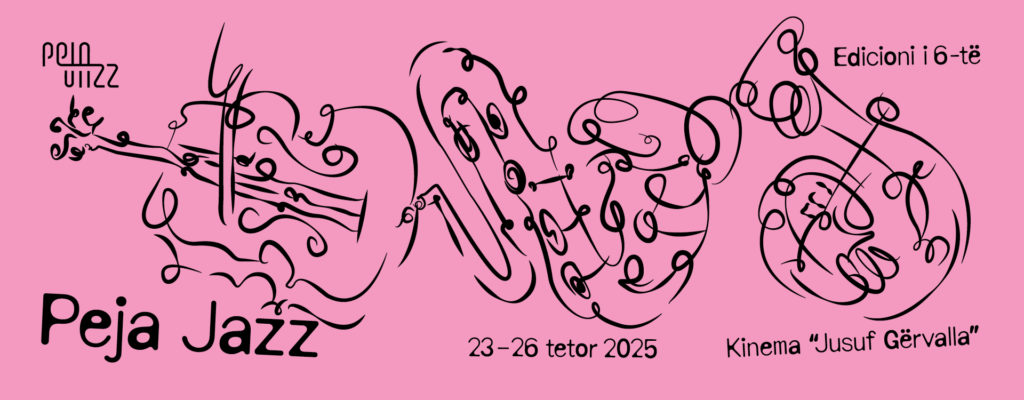
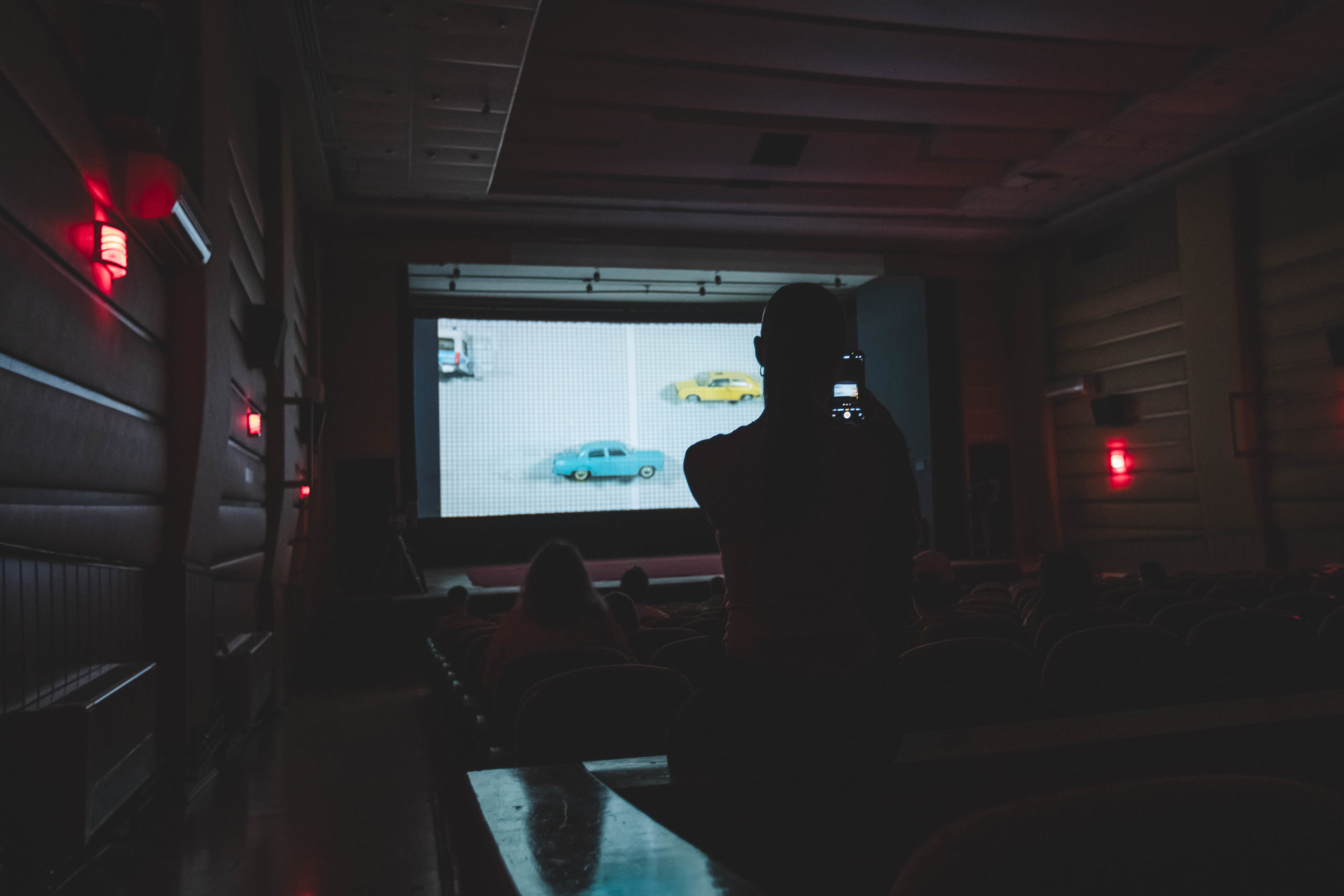
Below, you will be introduced to each entry in this category. The Balkan Competition films can be watched on July 17 starting at 16:00 at the “Jusuf Gërvalla” Cinema.
No Room (2025) directed by Jelena Oroz: “This film is my revenge,” says the director. Urban life carries with it the imaginary desires of a frustration that finds no body, yet takes shape and sharpens within fantasy. Pedestrian sidewalks occupied by cars without hesitation? That’s our daily reality. Oroz’s film could very well be a documentary of our collective desire when public space is overtaken by irresponsible individuals, leaving us torn between adopting that same stubborn disregard for shared spaces or choosing the shortcut of moral vigilantism.
Within the conditions of urban life, this forms an apocalyptic situation, mirrored by Oroz’s anthropomorphized car-characters, who operate through seizure, frenzy, and motorized madness.
Psychonauts (2024) directed by Niko Radas: Somewhere in space, in rocket ships built from wooden medicine boxes, all the illnesses that have left the human body are traveling. It’s a form of wishful thinking, but also a pure vision of what diseases might look like when embodied. It paints a clearer picture of the struggle and suffering they inflict on people.
In a modern and futuristic style, these diseased bodies become alien agents in space, living their own lives to a soundtrack that articulates the names of medications prescribed for specific conditions.
In a reality like ours where pharmaceuticals dominate bodies, economies, and well-beingv this film asks: can medicine cure illness, or merely reshape and adapt it within the human body as a way to keep going?
This film was created in collaboration with patients at the Vrapče Psychiatric Hospital as part of an art therapy workshop.
Moral Support (2024) directed by Juk Jevremovic: Inspired by the Slovenian band Laibach, formed in the 1980s with a distinct industrial and electronic style, this film is as delicate as it is emotionally intense. It brings the 20th century to life through the noise of protests, instability, inspiration for change, and an ongoing demand for freedom, hope, and rebellion.
How (2024) directed by Marko Mestrovic: This film invites us to question fate, randomness, routines, and the mysterious order that somehow arranges everything to form a person’s destiny. Through a poetic, fragmentary text accompanied by classical music, we follow this spiritual guide in the first person, narrated in a metallic and insistent voice.
The 2D scenes are fluid, flowing through transcendental time arches, leaving us with a message that either clarifies or confuses perhaps intentionally.
The Weed’s Gardener directed by Assia Kovanova: We meet an unusual pair: a gardener and a weed-spreader, who long for snow. After snow, they wish to grow plants, and then protect those plants from goats.This chain of absurd events operates on the idea that what seems like an obstacle is precisely what allows something to be realized. In a desolate environment resembling a lonely house on a hill, a familiar scene throughout the Balkans these beings undertake a mission and dedication to go along with whatever life throws at them.
Because they verbalize and act on it, the film’s narrative becomes a wondrous test of survival turned into an everyday routine.
Chronicity directed by Aleta Rasic: What does an ordinary day look like when all the routine expressions of life become both cause and consequence of the chaos experienced by a multitude of people? Through the animation style and event dynamics, with characters who work with various tools and function as a single, interconnected body, we are taken to the early 1900s. The mind may drift to “the calm before the storm” before World War I, when life in a small town revolved around events like distributing bread, meeting at the bar, going for a bike ride, or an impromptu quarrel. All of these serve as the well-orchestrated pulse of life, weaving into each other to show that even extraordinary things can happen on an ordinary day.
Silent Cinema directed by Krste Gospodinovski: This film brings to mind the stories of many who grew up and educated themselves through cinema in small towns. From early on, cinema has enchanted audiences by reproducing life through narratives that touch reality in both tangible and intangible ways just as the light of a projector touches the white canvas.
The main character, who narrates the story, introduces us to his father, who manages the theater where he grew up, marveling at silent films. His father, a film star of a bygone era, runs the cinema with great passion: a passion he passes on to his son.
But as every child who grows up does, the son eventually understands that the father has more to say than he’s ever expressed. Melancholy and big questions push the son to discover new layers of life, breaking and rebuilding barriers to shield himself from the outside world.
With a suspenseful and emotional style, the film draws us back to a space that holds the small pearls of moments with the self moments that cannot be replicated outside the doors of the cinema.
In one way or another, this program captures the essence of the Balkans like a coiled spring—with the light and shadow of noisy lives, with the impatience to explode and make a point. At Anibar, we find a program that speaks directly to the rawness of both social and emotional turbulence, all through the cinematic screen.
Author: Blerina Kanxha