A Tower of Memory, Grief, and Unbreakable Hope
This is what The Tower gives us: testimony.
There are films that entertain, and then there are films that wound you tenderly, leaving a scar that reminds you where you come from, and what humanity still has to answer for. Today, The Tower entered me like a whispered prayer and left like a storm.
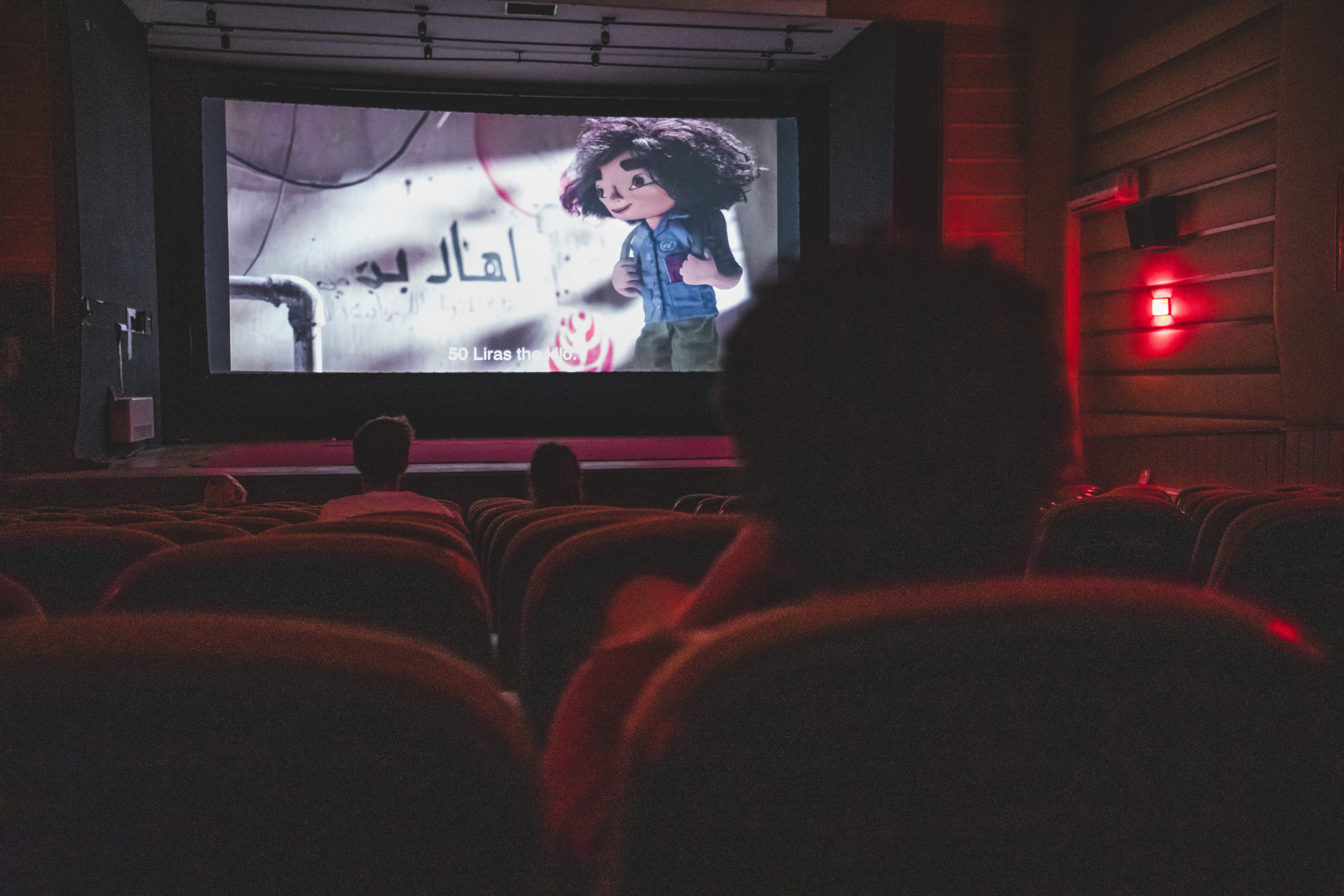
In the dim light of Cinema Jusuf Gërvalla, I watched as the story of one Palestinian girl unfolded, layered like the stones of a tower built from grief. The Tower is not only an animated film, it is a living archive of exile, a poetic cry of generations forgotten by the world but not by time.
The story begins in a Palestinian refugee camp in Lebanon, where a young girl is born into the walls of waiting. Her family, like so many others, carries the weight of a wound that began in 1948-Nakba, the catastrophe when thousands were forced to leave their homes without knowing where the wind would scatter them. They carried no suitcases, only a handful of earth, a few seeds, and a memory of what once was home.
The child, bright and hopeful, brings home an excellent report card. In her pride, she turns to her great-grandfather with innocent questions: Where do we come from? What is our land like? And so he opens the gates of memory, stories of olive trees and blooming gardens, of laughter, people, and sunlight that once kissed their lives. Around her neck, he places a key rusted, heavy with meaning, the only thing they brought from their home. Keep it safe, he says. One day, you may return.
But even stories, when told too long in captivity, begin to dim. The girl soon realizes that her great-grandfather has lost hope. His voice falters. His eyes no longer seek the horizon. Her father, broken in his own way, tends to pigeons on the roof, saying, “Birds are easier than people.”
And I sat in the theater, quietly breaking.
“Can someone die from sorrow?” the girl wonders.
“Can dreams be killed?”
“Do stars still remember the stories of those who stopped waiting?”
This is not simply a film. It is a requiem.
It is a eulogy for homes buried under borders.
A love letter to the land that remembers even if the world forgets.
It is Palestine—but it is also every people who have lived under exile, every child born into tents and silence.
In one of the most piercing moments, the girl asks her grandmother, “Do you hate those who killed you?”
“No,” she replies softly. “They killed us. And we killed them. But I hate those who hate.”
There is wisdom here too vast for words. Forgiveness not born of weakness, but of depth, of knowing that hatred is the true prison.
Then comes the moment that will never leave me:
When her great-grandfather dies, his body is not buried in earth but lifted by pigeons, carried upward toward the moon. A final journey. A silent return. A home beyond war, beyond politics, beyond despair.
I wept not only for him.
I wept for all those who died with a key still hanging around their neck.
I wept for Kosovo. For Afghanistan. For Syria. For every forgotten village, every burned-down memory. And I wept for the child in me who still believes in return.
Technically, the film’s 3D animation is striking, rendered with haunting textures that make memories feel tangible. The enemy is never shown, but you feel their presence through tanks, bullets, bombings, through the erasure of lives.
Old photographs flash through the scenes like ghosts. Smiling faces. A girl dancing. A boy under a fig tree. They are not there anymore—but memory insists: They were. They lived. They loved.
This is what The Tower gives us: testimony.
And for those who live without a recognized past, the future becomes a question suspended in air.
Until the final moment, when the old man’s voice whispers through death to his great-granddaughter: “I never lost hope because you are my hope.”
What more truth do we need?
In a world desperate for direction, The Tower doesn’t show us a map.
It gives us a key.
It places it around our necks and asks us to carry it with dignity, with sorrow, and with unshakable love.
What’s the future?
It lives in every child who dares to ask questions.
In every story passed down like sacred breath.
In every tower built from remembrance.
In every heart still daring to dream.
Despite my sorrow, I was glad that I still wander in refugee camps, trying to hold our dreams and hopes alive.
Author: Shqipe Malushi
Photo Credits: Anibar / Elmedina Arapi